Picture books written around what a child loves
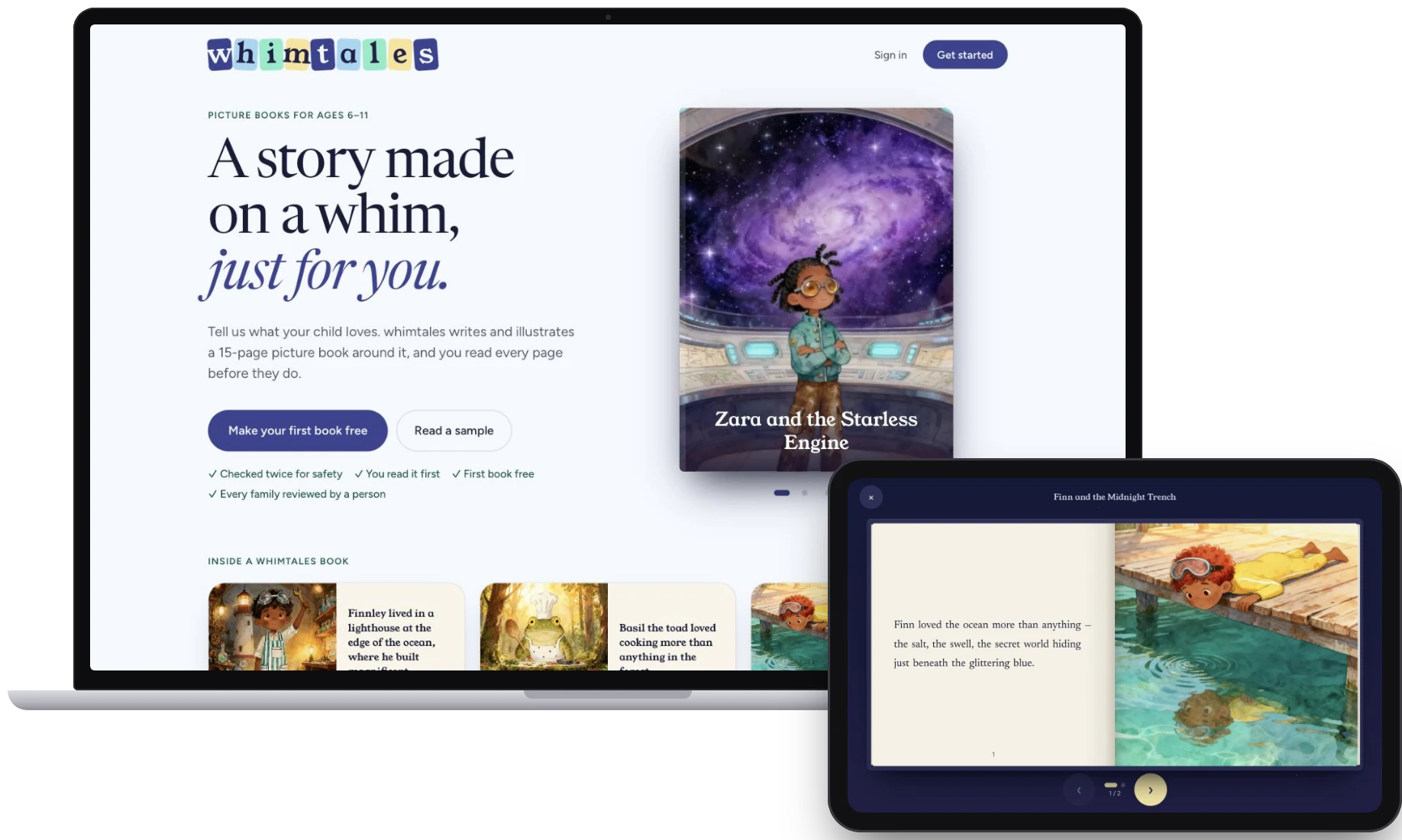
Whimtales is a personalized picture book app founded and built by my client Roven. A parent answers six questions, and Whimtales writes and illustrates a 15-page book with their child as the hero. I've been advising Roven on the name, the logo, usability and product direction.
The product
A new book about your child, ready in about twenty minutes
Parents tell Whimtales what their child loves, who the hero is and anything the child is going through right now. Whimtales writes the story and paints the pictures. Every story is checked for safety twice, and a parent reads it before it reaches their child's shelf.
- Answer six questionsWhat they love, who the hero is, and anything they're going through right now.
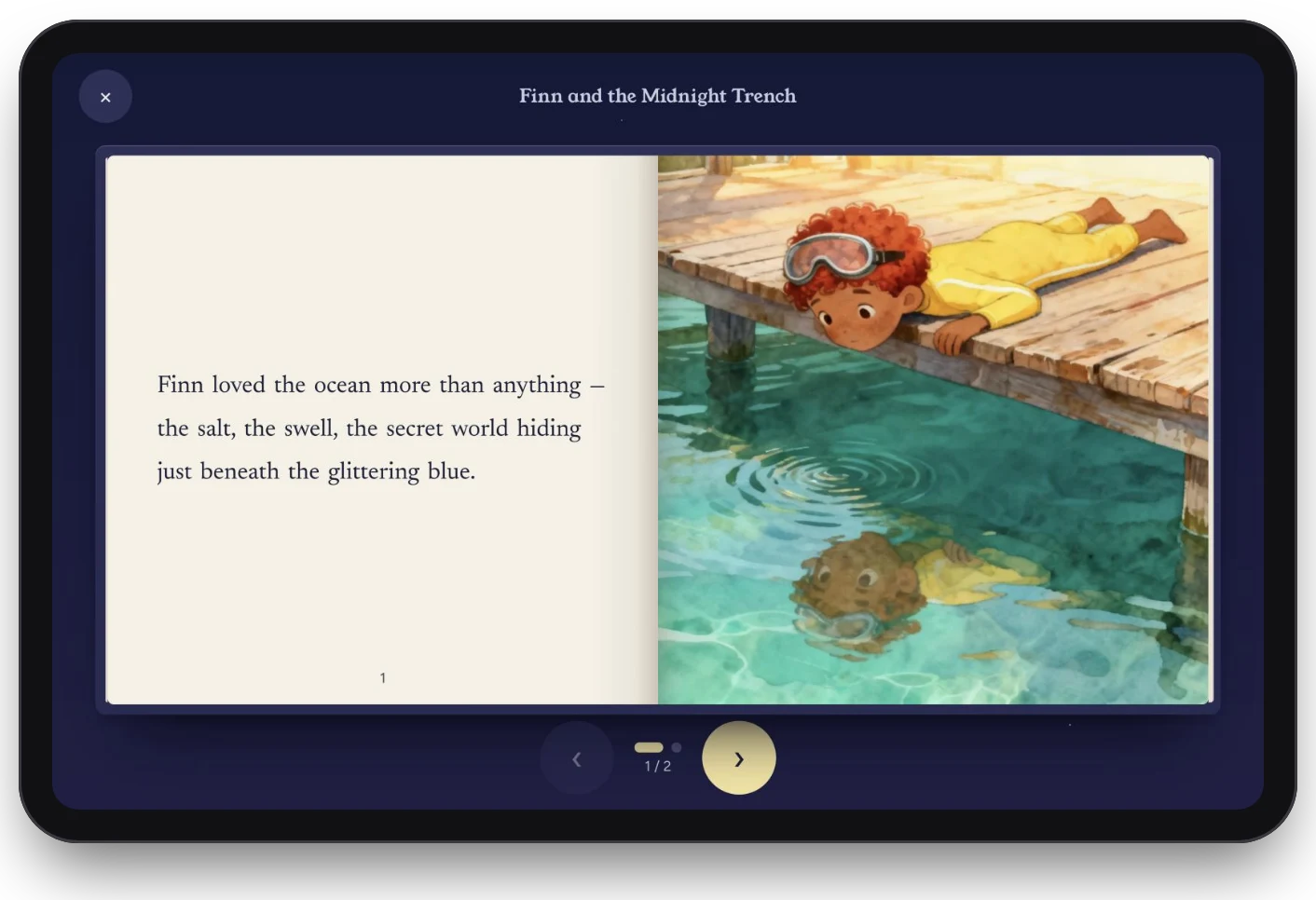
- Whimtales writes and paints itA 15-page illustrated book, checked for safety after the writing and again after the pictures.
- The parent approves, the child readsNothing reaches the child until a parent has read it.
My role
An outside product partner for a solo founder
Roven is the founder of Whimtales and builds the product. He brought me on as a product advisor, and I give feedback and direction where it helps most.
Naming
Helped Roven choose the name Whimtales.
Logo
Helped come up with the logo.
Usability and interface
Reviewing the product and suggesting usability and interface improvements.
Product direction
Advised on what release one should focus on, and on building relationships with schools.
Name and logo
A name that sounds like a bedtime story
The name had to feel playful to a child and trustworthy to a parent. Whimtales pairs the idea of a story made on a whim with the warmth of a fairy tale. The logo spells it out in tilted letter tiles, like blocks a child might line up on the floor.
Product direction
Start with picture books, then grow into chapter books
Whimtales could make books for any age. My advice was to start with younger readers, ages 3 to 7, which is the picture book age group. Picture books are short and simple to generate, so each book costs less to make and is easier to get right. Chapter books for older kids have far more text and more scenes to keep consistent, and that uses a lot more compute.
Release one
Picture books for younger readers
- Short and simple to generateA few lines of text per page, with one illustration each.
- Lower cost per bookLess compute per book helps keep the monthly plans affordable.
- Easier to checkA parent can read the whole book in a few minutes before approving it.
Later
Chapter books for older kids
- Much more textLonger stories with more characters and scenes to keep consistent.
- More compute per bookBetter to take on once the product and pricing are proven.
Release one should be the book that is simplest to make well. The bigger books can come once that works.
Hypothesis
Will stories about what they love get kids reading more often?
The bet behind Whimtales is that a child is more likely to pick up a book when the story is about them and the things they care about right now. For ages 3 to 7, that usually means reading together with a parent, so the habit we want to change is how often families sit down to read.
Personalized picture books built around a child's interests will lead children ages 3 to 7 to read, or ask to be read to, more often than they do with books that aren't personalized.
What would tell us it's working
Reading more often
How many times a week each child opens a book, and whether that number holds after the first few weeks.
Finishing the story
How many books are read through to the last page instead of abandoned partway.
Asking to read it again
Rereads of the same book are a strong sign a young child is attached to a story.
Parents notice a change
Short check-ins asking parents whether their child asks for stories more than before.
How we could test it
- Compare personalized and standard booksLook at how often the same children read their personalized books versus the Marketplace books on their shelf.
- Track a group of families over timeMeasure reading frequency in the first weeks and again after a couple of months, to see if the habit lasts once the novelty fades.
- Pilot with an elementary schoolWork with a few early grade classrooms and compare reading time with and without personalized books.
Growth
Building relationships with schools
I also gave Roven guidance on building relationships with school districts and elementary schools. Elementary schools are where young readers and their parents already are, and teachers and librarians are voices parents trust when it comes to reading. A relationship with a district can open the door to many schools at once.
Headwinds
Copyright is the biggest open question
Making stories with AI raises copyright challenges that the product has to plan for from the start.
Characters kids already love
Children often want stories about characters from their favorite shows and books. Those characters belong to studios and publishers, so Whimtales can't use them without permission.
Look-alike stories and art
Generated stories or illustrations could end up too close to an existing book or a known illustrator's style.
Who owns the book
In the United States, work made entirely by AI may not qualify for copyright protection, which affects what Whimtales and families can claim as their own.
Trust with parents and schools
Schools and districts will ask how stories are made and where the content comes from before they bring Whimtales into classrooms.
Today
Original stories only
- Original characters and worldsEvery story is built around the child and their interests, not someone else's characters.
- Checked before it reaches a childThe two safety checks and parent approval are also a chance to catch content that is too close to an existing work.
A possible pathway
Partner with publishers and authors
- Licensed characters and worldsPublishers and authors could license their characters so a child can star in a story alongside them.
- Authors tailor their own contentAuthors could shape personalized versions of their books, with control over how their characters are used.
- Shared revenueRights holders earn from every personalized book, which turns a risk into a new income stream for them.
Usability and interface
Ongoing feedback on the experience
I'm helping Roven with usability and interface enhancements as the product grows. I review the experience the way a parent would meet it, and suggest changes to make it clearer and easier to use.
What's next
Live now, with the first book free
Whimtales is live, and families can make their first book for free. I'm continuing to advise Roven as the product grows.
Make a book at whimtales.com